1. Introduction: The Urban Imperative for Karachi and Lahore
Pakistan's metropolitan infrastructure especially in Karachi and Lahore has reached a critical tipping point where neglect has evolved into a significant systemic liability. Through active involvement in plumbing, firefighting, and urban sustainability initiatives, I observe that urban disasters in these regions are rarely the result of sudden, unpredictable events; rather, they are the logical culmination of long-term infrastructure decay and regulatory bypass. In these dense, aging environments, the danger is not that a modern system has malfunctioned, but that the necessary safety architecture was never there to begin with.
The strategic "So What?" for stakeholders is clear: large-scale redevelopment or mass demolition is socially, economically, and logistically unfeasible in our current economic climate. Therefore, the only viable pathway for urban survival is a shift from a "new build" focus to "asset preservation." Retrofitting, the integration of modern safety and efficiency standards into existing structures is the strategic pillar required to stabilize our built environment. This transition represents a shift from reactive repair to a proactive lifecycle cost-benefit approach, ensuring that our metropolitan assets remain functional and safe without the need for total reconstruction.
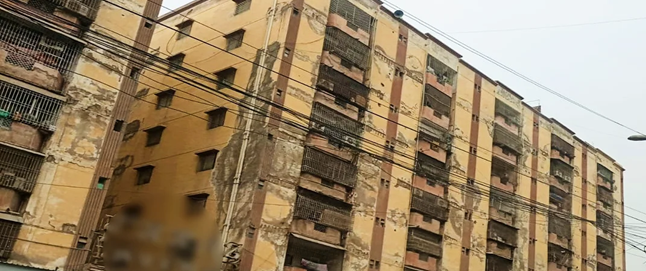
2. Defining Retrofitting: Beyond Surface Renovations
For developers, facility managers, and regulators, a clear technical definition of retrofitting is essential to distinguish it from routine maintenance or surface renovations. While maintenance aims to keep a building in its current state, retrofitting is an engineering intervention designed to elevate an asset's performance to meet contemporary standards.
Retrofitting is the systematic upgrading of existing buildings to align with current safety, performance, and regulatory standards without the necessity of demolition. It is a mature global practice driven by four primary strategic imperatives:
- Life-Safety Risk Reduction: Modernizing mechanical and fire systems to mitigate casualties
- Service Life Extension: Protecting the structural skeleton to prolong the building's operational utility
- Asset Protection: Guarding the economic value of the property and preventing catastrophic financial loss
- Regulatory Compliance: Bringing legacy structures into alignment with updated national and international building codes
In Pakistan's economic reality, retrofitting is a responsible and scalable solution. Beyond the technical benefits, failure to retrofit is a breach of primary responsibility to the building's occupants and a neglected capital risk that compromises the asset's long-term structural lifecycle.
3. The Plumbing Crisis: Evaluating Structural Risks and Material Realities
In the hierarchy of infrastructure management, plumbing is often dismissed as a secondary utility. This is a dangerous misconception. In high-density cities like Karachi, water seepage is not a localized nuisance; it is a neglected capital risk and an aggressive threat to the structural integrity of the building.
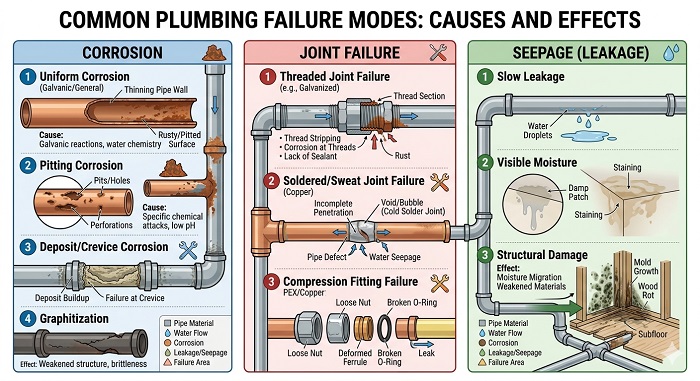
The industry-wide shift from Galvanized Iron (GI) to PVC, UPVC, and PPRC aimed to prevent corrosion, but failures still occur. These problems are usually not caused by the material, but by poor engineering supervision.
Technical Failure Analysis & Mitigation
| Common Failure Points | Root Cause | Strategic Modification |
|---|---|---|
| GI Pipe Degradation | Pipes rust and age over time, causing leaks through walls and slabs. | Replace old pipes with certified, non-corrosive polymer pipes. |
| PVC/PPRC Joint Failures | Poor joining techniques and use of low-quality or fake fittings. | Only use certified fittings and trained installers; perform pressure tests. |
| Thermal Deformation | Pipes expand or contract too much due to heat, causing stress and deformation. | Add expansion loops and follow recognized plumbing standards. |
| Seepage in Concrete | Poor workmanship creates hidden leaks that corrode concrete reinforcement. | Ensure skilled workmanship and strict quality checks during construction. |
The "So What?" factor here is the insurability and legal liability that follows structural devaluation. Invisible leaks cause the steel inside the concrete to rust, which makes the concrete crack and weakens the structure. Material selection is fundamentally irrelevant if the engineering process is compromised.
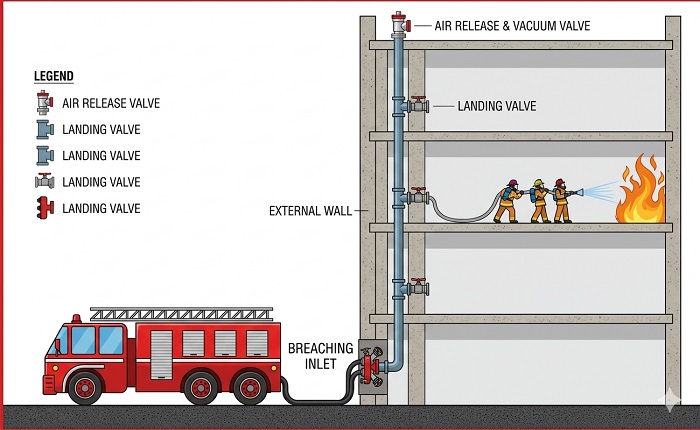
4. Firefighting Retrofitting: Designing for Internal Resilience
In densely populated areas of Karachi and Lahore, external fire response is often too slow to be effective. Narrow streets and heavy urban traffic mean the "flashover" point is often reached before the first fire engine arrives. Life safety, therefore, must be designed into the building's internal envelope.
A critical challenge specifically observed in Lahore is the "adaptive reuse" of residential buildings into schools, clinics, and offices. These conversions occur without upgrading the fire protection systems to match the higher occupancy loads, creating high-risk environments. To provide insurance against irreversible loss, retrofitted systems must include:
- Detection & Alarm: You need to detect the fire first before any active systems engage
- Smoke Management and Pressurized Staircases: Creating clear evacuation routes to prevent the primary cause of death: smoke inhalation
- Internal Hydrant and Wet Riser Systems: Providing immediate firefighting capability on every floor
- Dedicated Fire Pumps and Zoned Storage: Utilizing modular fire pumps and compact tanks to ensure pressure without requiring massive structural alterations
5. Global benchmarks: learning from international retrofitting policies
Creating a local system should use proven international examples, treating retrofitting as a practical solution for crowded areas, not a luxury.
- Singapore: implemented mandatory fire safety retrofitting for older buildings. Their success lies in phased enforcement, allowing building owners to achieve compliance through structured timelines
6. Standards System: Combining NFPA and ASHRAE Guidelines
Retrofitting must not be a separate effort; it requires a unified technical language. While NFPA (National Fire Protection Association) provides the benchmark for fire protection and life safety, ASHRAE (American Society of Heating, Refrigerating and Air-Conditioning Engineers) standards are indispensable for mechanical integration.
A complete approach to fire safety is essential. ASHRAE and NFPA standards guide HVAC systems to stop smoke from spreading through ducts and keep staircases properly pressurized. Retrofitting fails when fire safety is treated separately from ventilation. Proper integration makes the building's mechanical systems support life safety during an emergency.
7. Strategic Road Map: From Reaction to Regulation
The most expensive policy a city can adopt is waiting for the next disaster to trigger a temporary enforcement wave, like what happened in recent fire at Gul Plaza in Karachi. We must shift from post-incident scrutiny to a proactive regulatory framework. Modern technical solutions, such as surface-mounted piping, modular fire pumps, and advanced leak detection, now allow for these upgrades to occur in occupied buildings with minimal disruption.
Multi-Stakeholder Responsibility Matrix
| Stakeholder | Primary Action | Strategic Impact |
|---|---|---|
| Government/Regulators | Shift from reactive inspections to proactive, mandatory fire safety audits. | Reduced public liability and standardized urban safety levels. |
| Building Owners | View retrofitting as an investment in asset protection and risk mitigation. | Increased property value, lower insurance premiums, and reduced legal risk. |
| Engineers/Consultants | Lead with professional integrity, adhering strictly to NFPA/ASHRAE codes over cost-cutting. | Validated system reliability and long-term structural resilience. |
| Inspection Authorities | Conduct regular, independent inspections and certify compliance with fire safety standards. | Early detection of hazards, enforcement of safety norms, and enhanced public trust. |
8. Final Thoughts: A Safer Urban Future
Pakistan's metropolitan centers cannot afford the escalating cost of inaction. Every unaddressed leak and every building without a functional fire riser is a compounding risk to our national economic continuity and urban dignity. Retrofitting is the most impactful investment we can make toward a resilient Pakistan.
The Engineering community must lead this transformation. By moving beyond "maintenance" and embracing "retrofitting" as a strategic imperative, we can ensure that our cities are not just built to exist, but are built to protect.
References:
- National Fire Protection Association (NFPA). Fire Code and Life Safety Standards (NFPA 1, 13, 14, 72). https://www.nfpa.org/codes-and-standards
- ASHRAE (American Society of Heating, Refrigerating and Air-Conditioning Engineers). ASHRAE Handbook -- HVAC Applications; Standards 62.1 & 90.1. https://www.ashrae.org/technical-resources/ashrae-handbook
- Government of Pakistan. Pakistan Building Code -- Fire Safety & Building Services Provisions. https://www.pakistan.gov.pk
- World Bank Group. Building Regulation for Resilience: Managing Risks for Safer Cities. https://www.worldbank.org/en/topic/urbandevelopment
- United Nations Office for Disaster Risk Reduction (UNDRR). Making Cities Resilient Framework.